September 2, 2026
The Language of Spores: Aerobiology and the Cloud-Making Fungi
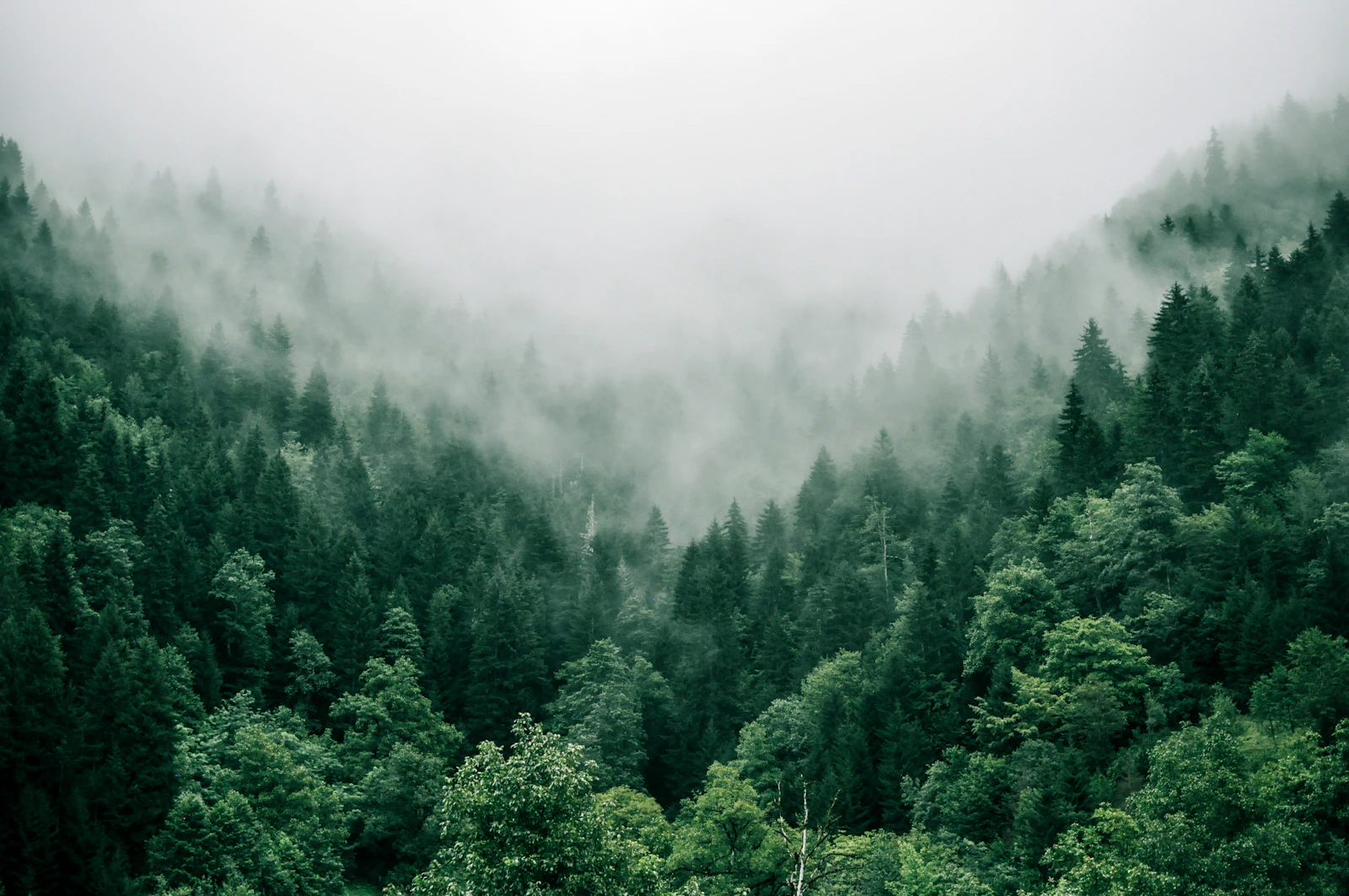
DADr. Aris Thorne@aris_thorneStep out into a temperate forest on an August morning after a heavy rainfall, and you will breathe in an aerosol composed of millions of microscopic passengers. We call this smell 'petrichor' or the 'woodland musk', attributing it loosely to damp earth. What you are actually inhaling is an atmospheric bio-plume of fungal spores launched from gills, pores, and apothecia with supersonic accelerations.
For decades, meteorologists treated cloud formation as an abiotic thermodynamic process: water vapor condensing onto inert mineral dust, sea salt crystals, and volcanic soot. But recent advances in aerobiology have revealed an astonishing ecological feedback loop: the forest does not merely receive rain from the sky; the forest fungi actively manufacture the clouds that water them.
The Ballistics of the Buller's Drop
A typical gilled mushroom—like the field mushroom (Agaricus campestris) or the deadly destroying angel (Amanita bisporigera)—produces up to thirty thousand spores every single second. But because the spores hang inside microscopic gills only fractions of a millimeter apart, the mushroom cannot simply let them drop; surface tension would cause them to stick to the gill wall.
The fungus solves this through a microscopic hydraulic catapult called Buller’s drop. Two droplets of water condense on the spore’s surface: a spherical drop at the base and a flat film on the adaxial face. When the spherical drop expands until it touches the film, surface tension collapses the water into a single droplet in less than two microseconds.
“The rapid shift in center of mass releases surface energy, firing the microscopic spore horizontally into the open air with an acceleration exceeding 25,000 times gravity—faster than an artillery shell leaving a cannon barrel.”
Bio-Precipitation: Seeding the Rainforest Skies
Once airborne, basidiospores are swept up by convective thermal drafts rising through the sunlit tree canopy into the planetary boundary layer, climbing thousands of meters into the troposphere.
At high altitudes, pure water vapor will not condense into raindrops without a nucleation catalyst—a seed around which water molecules can organize into ice crystals. Fungal spores, coated with hygroscopic sugar alcohols like mannitol and specialized ice-nucleating proteins, are up to one hundred times more efficient at seeding ice crystals than inorganic sand dust.
In the Amazon and the Pacific Northwest, over eighty percent of cloud condensation nuclei during the wet season are biological particles, dominated by fungal spores. The mushroom fires its spores into the stratosphere; the spores trigger cloud formation; the clouds condense into torrential rain; and the rain falls back onto the forest floor, moistening the duff so the mycelium can flush more mushrooms.
To observe this is to realize that the boundary between geology, meteorology, and biology is an artificial invention of human academic departments. The earth, the fungus, and the cloud are three movements of a single, continuous organism breathing across the sky.