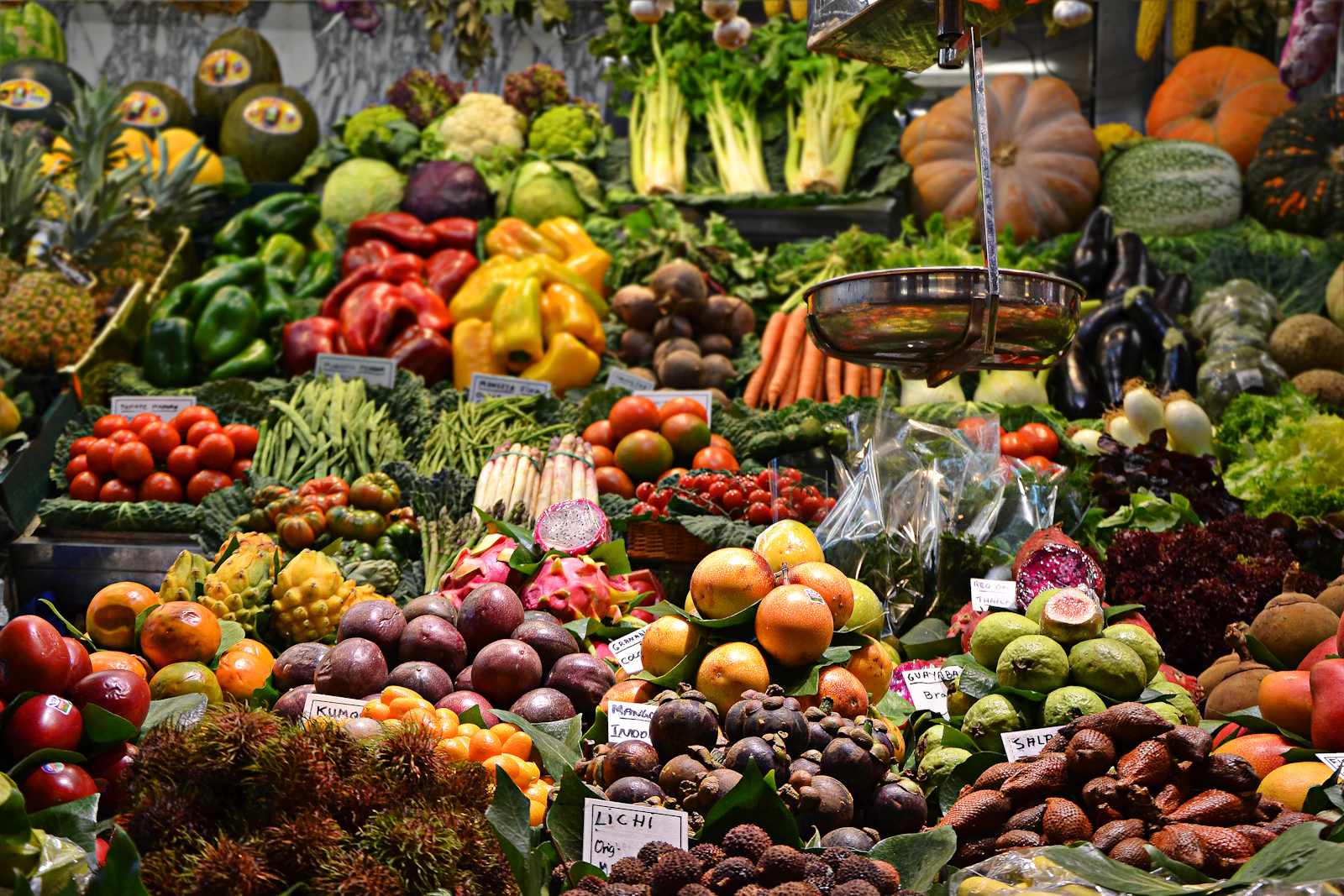
If I have one afternoon in a city I have not been to, I do not go to the monument. I go to the market. The monument will still be there, performing the past. The market is the present tense, and it will tell you more about a place than any bronze horse.
A good market is a map you can eat. The first thing I look for is not the photogenic pile of spices. I look for what is cheap and abundant. That is the season. Tomatoes stacked without tenderness mean it is their moment. A single expensive mango on a cloth means it is not. You can learn a climate in ten minutes this way.
Then I listen. Markets have a pitch. In some cities it is a bright bargaining, almost musical. In others it is a low, practical murmur, as if everyone has already agreed on the price and is only confirming. The pitch tells you how strangers are supposed to behave. I try to match it. There is no faster way to look like a fool than to perform the wrong kind of haggle.
I buy something I do not need. A handful of herbs I cannot name. A pastry that will fall apart in my bag. A small knife that will never make it through customs in my carry-on, so I leave it with the hotel desk and feel briefly like a person with a kitchen. The purchase is a ticket into a conversation. Once you have paid, you are allowed to ask what to do with the herbs. Once you have asked, you are no longer only a camera.
The best stalls are rarely the cleanest. I learned this the slow way, by getting sick once and then, later, by getting fed by the stall that looked like a dare. Cleanliness in a market is not the same as care. Care looks like a woman sorting chilies with a speed that is a form of respect. Care looks like ice that is actually ice, not a rumor of ice. Care looks like the same customers coming back, which you can see if you stand still long enough to watch the traffic of bags.
I use markets to decide where I will eat at night. If the fish is bright in the morning, I look for a place that will cook it simply in the evening. If the bread is gone by ten, I know the city takes breakfast seriously. If there are more plastic-wrapped imports than local greens, I adjust my expectations and also my sadness. A market is honest about what a place can afford to grow and what it has to fetch from elsewhere.
There is a cruelty in this, I know. I get to stroll through other people's livelihoods with a notebook. I try to pay for that privilege with attention instead of just cash. I learn a few words for weights. I do not touch the fruit unless invited. I do not take photos of faces without the kind of hello that could become a no.
When I leave, I write down the prices. Not because I will remember them accurately, but because prices are a diary of a week in a place. Eggs, onions, a bottle of oil, a handful of the herb I still cannot name. Months later, those numbers bring back the heat and the argument at the next stall more clearly than my photographs of the monument.
A map shows you how to get across a city. A market shows you how the city feeds itself. I know which one I trust when I am trying to understand where I am.
1 like